
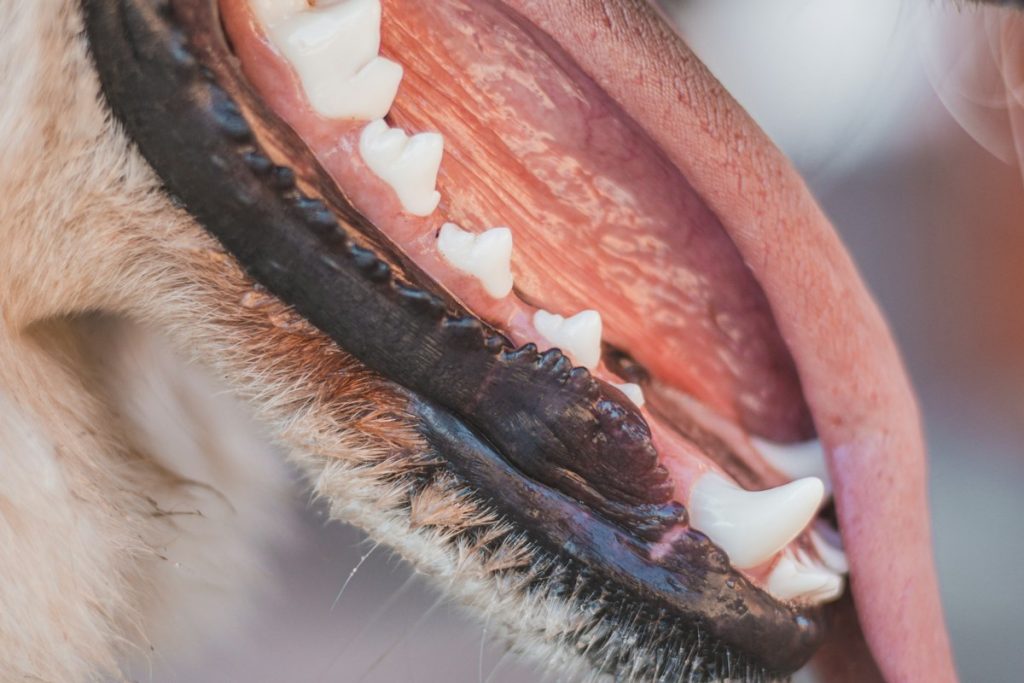
Brushing is the single most effective thing you can do at home for your dog’s teeth, according to the American Veterinary Medical Association (AVMA). It is also the habit most owners give up on after one wrestling match. The trick is to go slower than you think you need to.
Quick answer: To brush your dog’s teeth, use a soft dog toothbrush or finger brush and dog toothpaste. Lift the lip, hold the bristles at a 45-degree angle toward the gumline, and brush the outer surfaces with short back-and-forth strokes. Build up over one to two weeks with treats, then brush daily.
What you’ll need
- A soft toothbrush or finger brush. Colorado State University’s (CSU) veterinary hospital recommends an adult or child-size soft-bristled brush or a silicone finger brush, used for one pet only.
- Dog toothpaste. CSU recommends an enzymatic pet toothpaste. Never use human toothpaste.
- Small, soft treats. Rewards make the whole thing work. Our low-calorie treat picks are ideal.
See dog toothpaste on Amazon →
See finger brushes on Amazon →
How do you brush a dog’s teeth, step by step?
This follows the method from CSU Veterinary Health, broken into days so your dog never feels cornered.
| Days | What to do | Goal |
|---|---|---|
| 1 to 2 | Let your dog lick toothpaste off your finger. Treat. | Toothpaste = good thing |
| 3 to 4 | Lift the lip for a second, touch the outside of a front tooth with your finger. Treat. | Calm with hands near the mouth |
| 5 to 7 | Brush two or three front teeth with the brush. Treat. | Accepts the brush |
| 8 to 14 | Work back to the side and back teeth, a section at a time, with breaks for treats. | Full mouth in one short session |
Once your dog is comfortable, each session looks like this:
- Start with a treat and show your dog the brush and toothpaste.
- Lift the lips gently so you can see the teeth and gumline.
- Angle the bristles about 45 degrees toward the gums.
- Brush the outer surface of each tooth or small group of teeth with about three short back-and-forth strokes. Use light pressure. CSU’s tip: the bristles shouldn’t flare out or flatten against the teeth.
- Pause for rewards as often as your dog needs until every section is done.
Brush at the same time every day, such as after the evening walk, so it becomes part of the routine. CSU also suggests involving the whole family.
Common mistakes to avoid
- Going too fast. Forcing a full brushing on day one teaches your dog to avoid the brush.
- Pressing too hard. If the bristles splay, ease off.
- Using human toothpaste. It isn’t made for dogs to swallow.
- Skipping the back teeth. The big back teeth often collect the most tartar.
- Giving up after a bad day. Go back a step, keep it short, and end on a win.
What if your dog still won’t tolerate a brush?
Some dogs need a bridge. Disposable finger wipes let you scrub the teeth with less fuss, and food powders or water additives add low-effort support. Our guide on how to clean your dog’s teeth without brushing compares the options, including which ones carry the VOHC Seal of Acceptance.

When should you call your vet?
We are dog owners, not veterinarians. Stop brushing and call your vet if you see bleeding gums, a broken or loose tooth, swelling around the mouth, or if your dog suddenly drops food or chews on one side. Brushing prevents problems, but it can’t fix disease below the gumline. The AVMA recommends a dental check at least once a year.
Frequently asked questions
How often should I brush my dog’s teeth?
Daily is best. Colorado State University’s veterinary hospital recommends daily brushing, and the AVMA says brushing several times a week can still be effective if daily isn’t realistic.
Can I use human toothpaste on my dog?
No. Use a toothpaste made for dogs. Human toothpaste isn’t meant to be swallowed, and dogs can’t rinse and spit. Dog toothpaste comes in flavors dogs like, such as poultry.
What kind of toothbrush is best for dogs?
A soft-bristled brush. CSU suggests an adult or child-size soft toothbrush or a silicone finger brush, used for only one pet.
How long does it take to get a dog used to brushing?
CSU recommends building up gradually over one to two weeks. Short, positive sessions with rewards work better than trying to brush every tooth on day one.
Do I need to brush the inside of my dog’s teeth?
Focus on the outside surfaces facing the cheeks. That is where most plaque builds up, and it is what CSU’s method targets. Your dog’s tongue does some of the work on the inside surfaces.
What if my dog won’t let me brush at all?
Use dental wipes or a VOHC-accepted food or water additive as a stopgap, and keep working on brushing in tiny steps. See our guide to cleaning your dog’s teeth without brushing.
Bottom line
Brushing your dog’s teeth takes about two minutes a day once the habit is in place. Build up over a week or two, keep it positive, and brush the outside surfaces at a 45-degree angle. Your dog’s breath, and your vet, will thank you.
Related reading
- Dog Health: all our health guides
- How to Clean Your Dog’s Teeth Without Brushing
- Why Does My Puppy Bite Me So Much? (teething and mouthing)