
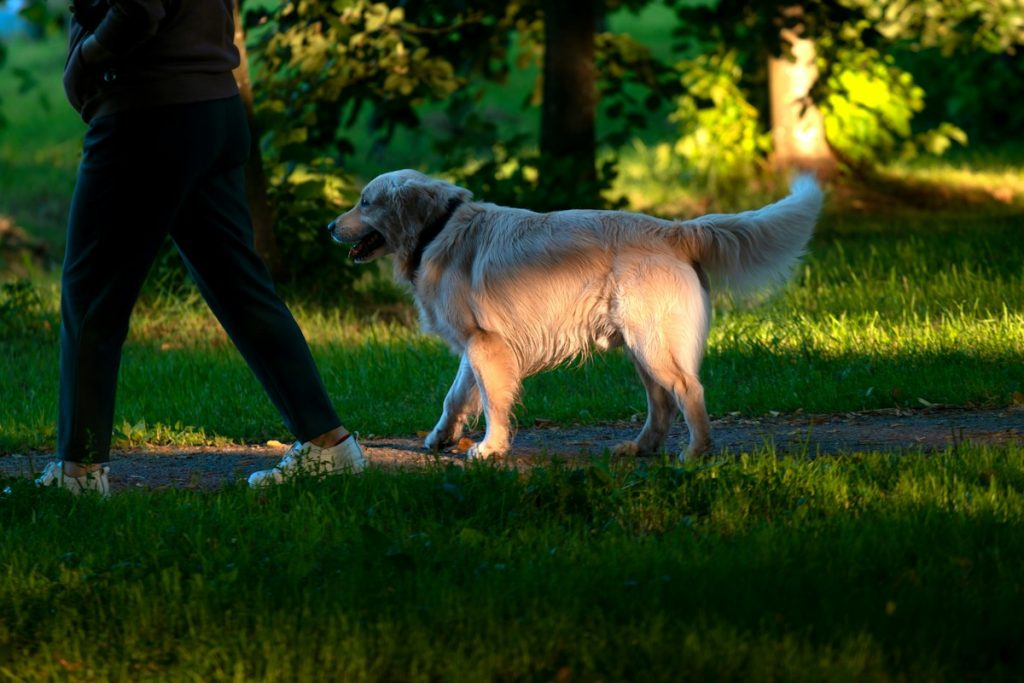
One day you run your hand along your older dog’s back legs and something feels different. The thighs are thinner, the hips feel bonier, and getting up from the floor takes a little longer. It is easy to file that under “just getting old,” but muscle loss is worth paying attention to, and there is a lot you can do about it.
Quick answer: Muscle loss in senior dogs, called sarcopenia, is the gradual loss of lean muscle with age. It usually shows first in the hind legs. See your vet to rule out disease, then focus on a protein-rich diet, daily low-impact exercise like walking or swimming, and home changes like ramps. Some supplements have early evidence behind them.
What is sarcopenia in dogs?
Sarcopenia is the progressive loss of lean muscle mass due to aging, as veterinarian Dr. Brittany Kleszynski explains on PetMD. It is not caused by a disease, although several conditions can make it worse.
It is different from simple weight loss. A dog who is not eating enough loses fat and muscle all over and bounces back quickly once fed properly. A dog with sarcopenia loses mostly muscle and does not regain all of it, which is why catching it early matters.
What are the signs of muscle loss in older dogs?
According to PetMD, the common signs include:
- Thinner hind legs and hips (usually the first place you notice it)
- A front end that looks noticeably stronger than the back end
- A sunken look around the head and face
- Ribs and spine that are easier to see or feel
Behavior clues often show up alongside: slower to stand up, hesitating at stairs or the car, shorter walks, or slipping on smooth floors. With Kai now about seven, this is a topic on our own radar too.
What causes it, and what else could it be?
| Factor | Role in muscle loss |
|---|---|
| Aging | The main cause of sarcopenia |
| Inactivity | Less use means less muscle, and less muscle makes activity harder |
| Arthritis | Pain reduces movement, which speeds up muscle loss |
| Kidney disease, diabetes, Cushing’s disease | Can worsen muscle loss and need their own treatment |
| Cancer, congestive heart failure | Can cause serious muscle wasting; need prompt vet care |
Because several of these are serious, PetMD notes a vet should rule out other causes with an exam and tests like blood work or imaging before calling it sarcopenia.
How can you help a senior dog keep muscle?
Sarcopenia cannot be cured, but it can be managed, and earlier action may slow further loss. Here is a plan you can start this week, after your vet has given the all-clear.
- Book the vet visit first. Ask them to confirm it is age-related and to suggest an exercise level that is safe for your dog’s joints and heart.
- Talk about protein. PetMD recommends a high-protein diet for sarcopenia. Your vet can tell you whether that is right for your dog, especially if kidney health is a concern.
- Walk more often, not longer. Two or three shorter, steady walks a day keep muscles working without overloading sore joints. Swimming is another low-impact option.
- Make the house easier. Ramps for the couch or car, stairs, rugs on slippery floors and a support sling harness help your dog keep moving instead of avoiding movement.
- Ask about joint support. PetMD mentions that omega-3 fatty acids may support muscle health, and that vet-prescribed anti-inflammatories or joint supplements can make exercise more comfortable.
- Track it. Take a photo of your dog from the side and above every month. Changes are easier to see side by side than day to day.
A good night’s rest matters for older joints too. Our dog bed guide covers durable, supportive options.
What about muscle supplements for dogs?
Supplements are not a substitute for the steps above, but one has more published research behind it than most.
Our pick: MYOS Canine Muscle Formula
MYOS Canine Muscle Formula is a powder you mix into wet or dry food. Its active ingredient is Fortetropin, which MYOS describes as a bioactive ingredient made from fertilized egg yolk that helps reduce myostatin, a protein that limits muscle growth. The brand says it has no fillers or artificial additives and is suitable for all breeds, sizes and life stages.
The strongest evidence comes from a 2020 study in PLOS ONE from Kansas State University. It was a randomized, double-blinded, placebo-controlled trial of 100 client-owned dogs recovering from TPLO knee surgery. Over the first eight weeks, the placebo group lost a significant amount of thigh circumference (about 1.2 cm) while the Fortetropin group showed no significant change. Both groups improved how much weight they put on the operated leg, and the difference between them was not statistically significant.
Two honest caveats. First, that study looked at dogs recovering from surgery, not healthy senior dogs, so it does not prove the product reverses age-related muscle loss. Second, the brand’s broader claims (such as its count of clinical studies) come from MYOS itself. Still, it is one of the few dog muscle supplements with a peer-reviewed, placebo-controlled trial, which is why we chose it. Run it by your vet, especially if your dog takes other medications or has an egg allergy.
Why we picked it: published, placebo-controlled evidence for preserving muscle during inactivity, and an easy food-topper format older dogs accept.

When should you call your vet?
We are dog owners, not veterinarians. Call your vet promptly if your senior dog has:
- Muscle or weight loss you can see or feel, especially if it is getting worse quickly
- Changes in appetite, thirst or urination
- Trouble standing, collapsing or dragging a leg
- Lethargy, coughing or breathing changes
- Signs of pain, such as reluctance to be touched or new irritability
Muscle loss can be normal aging, but it can also be an early sign of something that needs treatment. Only an exam can tell the difference.
Frequently asked questions
Why is my senior dog losing muscle in the back legs?
Age-related muscle loss, called sarcopenia, usually shows up in the hind legs first, while the front end tends to keep its muscle longer, according to PetMD. Inactivity and conditions like arthritis, kidney disease, diabetes or Cushing’s disease can speed it up, so a vet should rule those out.
Can a senior dog regain lost muscle?
Some, but usually not all. PetMD notes that dogs with sarcopenia do not regain all lost muscle the way a starved dog recovers with food. The goal is to slow further loss with protein, low-impact exercise and treatment of any underlying condition.
What is the best exercise for a senior dog with muscle loss?
Daily low-impact activity such as walking or swimming, paced to your dog’s health. Several shorter walks often work better than one long one. Ask your vet before starting anything new, especially if your dog has arthritis or heart disease.
Does MYOS Canine Muscle Formula work?
There is published evidence in one specific situation. A randomized, double-blind, placebo-controlled study of 100 dogs after TPLO knee surgery, published in PLOS ONE in 2020, found the Fortetropin group did not lose significant thigh circumference over eight weeks while the placebo group did. That study was in surgical recovery, not in healthy senior dogs.
Should my senior dog eat a high-protein diet?
PetMD recommends a high-protein diet for managing sarcopenia, but protein needs depend on your dog’s overall health. Dogs with kidney disease, for example, may need a different plan, so check with your vet before switching foods.
When should I take my older dog to the vet for muscle loss?
As soon as you notice it. Muscle loss can be normal aging, but it can also be a sign of cancer, diabetes, kidney disease or heart failure. A vet exam and possibly blood work or imaging are needed to tell the difference.
Bottom line
Thinning back legs in an older dog are common, but they are not something to ignore. Start with a vet check, then keep your dog moving with short daily walks, the right diet and a home that is easy to get around. A supplement like MYOS Canine Muscle Formula can be a reasonable addition once your vet agrees.
Related reading
- Dog Health: all our health guides
- Best Dog Beds for Chewers
- Loose Leash Walking: A Step-by-Step Guide (calm, steady walks help dogs of any age)
Sources
- PetMD: Sarcopenia in Dogs (Brittany Kleszynski, DVM)
- White DA et al. Fortetropin inhibits disuse muscle atrophy in dogs after tibial plateau leveling osteotomy. PLOS ONE, 2020
- MYOS Canine Muscle Formula product listing on Amazon (manufacturer description), checked November 1, 2026