
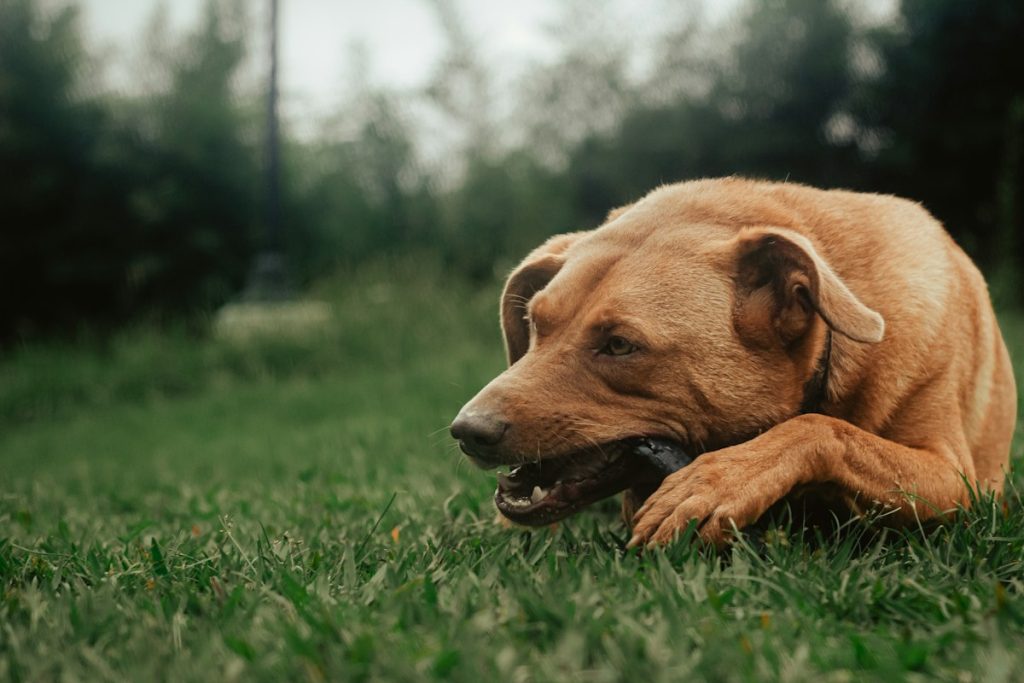
The dental chew aisle is crowded, and almost every bag promises cleaner teeth and fresher breath. Very few of those promises have been checked by anyone outside the company that makes them. This guide sticks to chews that have earned the Veterinary Oral Health Council (VOHC) Seal of Acceptance, sorted by your dog’s size, with the safety and calorie details that bags tend to bury.
Quick answer: The best dental chews for dogs are ones on the VOHC accepted list, sized to your dog’s weight and given once a day under supervision. Our picks are Greenies Original, Whimzees Brushzees, C.E.T. VeggieDent FR3SH, OraVet Dental Hygiene Chews and Purina DentaLife. Chews help, but daily brushing is still the gold standard.
What does VOHC acceptance actually mean?
The VOHC is a council of veterinary dentists and dental scientists. It does not test products itself. Companies run trials under VOHC protocols, submit the data, and the council decides whether the product meets its preset standard for slowing plaque, tartar (calculus) or both.
For chews and treats that work mechanically, the bar is specific. According to the VOHC’s trial protocol requirements, the product needs at least a 15% reduction compared with a control group in each of two trials, and an average reduction of at least 20% across both. That is a meaningful, repeatable effect, not a marketing survey.
Two details matter when you shop:
- The claim can be plaque, tartar or both. Plaque is the soft bacterial film on teeth. If it stays put, it thickens and mineralizes into tartar, a rough layer that attracts more plaque, as VCA Animal Hospitals explains. A chew accepted for both is controlling the problem at two stages.
- Acceptance is product-specific. A brand having one accepted chew does not mean every shape or flavor it sells is accepted. Check the exact product name on the VOHC accepted products list.
Are dental chews as good as brushing?
No, and the major veterinary bodies agree on this. The American Veterinary Medical Association (AVMA) calls regular brushing “the single most effective action you can take” for your pet’s teeth, with daily brushing best and several times a week still effective. The VOHC itself says “the gold standard is brushing,” while noting that daily chewing can also help maintain oral health.
The 2019 AAHA Dental Care Guidelines add an important limit: brushing removes plaque, not tartar that has already formed, and even daily brushing does not replace a veterinary dental exam. VCA notes that once tartar is established, it takes professional scaling under anesthesia to remove it.
So treat a chew as a daily helper, not a replacement. If your dog will accept a toothbrush, our step-by-step guide to brushing your dog’s teeth is the place to start. If brushing is a battle, our guide to cleaning your dog’s teeth without brushing covers wipes, powders and water additives that pair well with a chew.
How we picked
We are real dog owners, not vets, so we leaned on the VOHC list rather than our own opinions. Every pick below:
- Appears by name on the VOHC accepted products list for dogs (checked November 2026).
- Is sold to consumers, not veterinary-only.
- Has published weight-based sizing.
- Covers a different need, such as plant-based ingredients or an active ingredient.
VOHC-accepted dental chews at a glance
| Product | VOHC claim | Sizes (dog weight) | Notes |
|---|---|---|---|
| Greenies Original Dental Treats | Plaque, Tartar | Teenie 5-15 lb, Petite 15-25 lb, Regular 25-50 lb, Large 50-100 lb | Not for dogs under 5 lb or 6 months. Regular is 86 kcal per treat. |
| Whimzees Brushzees | Plaque, Tartar | XS 5-15 lb, S 15-25 lb, M 25-40 lb, L 40-60 lb, XL 60+ lb | Vegetable-based. Only the Brushzees and Toothbrush shapes are on the VOHC list. |
| C.E.T. VeggieDent FR3SH | Plaque, Tartar | XS under 11 lb, S 11-22 lb, M 22-66 lb, L over 66 lb | Plant-based, no animal protein. 24 to 105 kcal depending on size. |
| OraVet Dental Hygiene Chews | Tartar | XS 3.5-9 lb, S 10-24 lb, M 25-50 lb, L over 50 lb | Contains delmopinol. One chew a day, given whole. Dogs 6 months and older. |
| Purina DentaLife Daily Oral Care | Tartar | Small/Medium 20-40 lb (other sizes sold) | Chewy, porous texture. Small/Medium is 63 kcal. Not for dogs under 1 year or 15 lb. |
The picks
Best overall: Greenies Original Dental Treats
Greenies have held VOHC acceptance for plaque and tartar since 2007, and the Puppy, Aging Care, Weight Management and Grain-Free versions are listed separately too. That makes it easy to stay on an accepted product as your dog ages.
The label sizes them by weight (see the table) and says they are not for dogs under 5 pounds or under 6 months. It also tells you to cut your dog’s meal by 86 calories for each Regular treat.
Why we picked it: the longest-standing plaque and tartar acceptance in the category, with clear weight-based sizing.
Best vegetable-based chew: Whimzees Brushzees
Whimzees Brushzees are listed by the VOHC for both plaque and tartar. Wellness says they are made from limited, vegetable-based ingredients such as potato starch, glycerin and powdered cellulose, and that the nubs and ridges are designed to scrub along the gumline as your dog chews.
One catch: Whimzees makes many shapes, but only the Brushzees and Toothbrush versions appear on the VOHC list. Wellness says they are not for dogs under 5 pounds or under 3 months.
Why we picked it: a VOHC-accepted option for owners who prefer to avoid animal-derived treat ingredients.
Best for small dogs: C.E.T. VeggieDent FR3SH
Virbac’s VeggieDent FR3SH chews are VOHC accepted for plaque and tartar. Virbac describes them as plant-based and gluten-free, with no animal-derived ingredients, and the Z-shape is meant to reach from front to back teeth.
Virbac publishes calories for every size: 24 kcal for Extra Small (under 11 pounds), 48 for Small, 75 for Medium and 105 for Large. They do contain grain proteins, which matters if your dog is on an elimination diet.
Why we picked it: a dedicated extra-small size with a published calorie count, which makes small-dog treat budgets easier to manage.
Best active-ingredient chew: OraVet Dental Hygiene Chews
OraVet chews work two ways. The chewy texture scrubs the teeth, and the chew contains delmopinol, which the label lists at 0.7%. Boehringer Ingelheim says the chew coats the teeth with a barrier that helps keep bacteria from attaching. The VOHC accepts OraVet for tartar.
The label is strict: one chew per dog per day, sized by weight, given whole and never broken or cut. It is not recommended for puppies under 6 months or for pregnant or nursing dogs, and it can turn stool green.
Why we picked it: a chew-plus-coating approach from an animal health company, with tight dosing rules that keep it simple.
Best softer chew for adult dogs: Purina DentaLife Daily Oral Care
DentaLife Daily Oral Care treats are VOHC accepted for tartar in their North American sizes. Purina’s Small/Medium page lists 63 kcal per chew, sizes it for adult dogs of 20 to 40 pounds, and says it is not for puppies under one year or dogs under 15 pounds. Its feeding directions repeat the 10% treat rule.
Why we picked it: an easy-to-find, VOHC-accepted daily treat for adult dogs who do well with a chewier texture.
Are dental chews safe for dogs?
Accepted chews are safe for most dogs when used as directed, but “as directed” does the heavy lifting. The VOHC names two ways to cut the risk of a chew causing an obstruction: give the right size for your dog’s body weight, and only give chews when you can watch your dog eat them.
- Size by weight, then size up if your dog gulps. Wellness advises choosing a larger size if your dog tends to swallow treats whole. A chew that is too small is a choking risk.
- Supervise every time. Stay nearby until the chew is gone, and throw away any leftover end.
- Follow the age limits. They differ by brand, from 3 months for Whimzees Puppy to one year for DentaLife.
- Keep fresh water out. Several labels, including OraVet’s, call for it.
Which hard chews should you avoid?
Hard chews are a leading cause of broken teeth. VCA says most tooth fractures happen when dogs chew objects that are too hard, naming ice cubes, bones, hard nylon chews, antlers and horse and pig hooves. The AAHA guidelines task force wrote that there is “not a strong rationale” for offering hard treats like antlers or synthetic or natural bones.
A simple test comes from veterinary dentist Bonnie Shope, VMD, quoted in Tufts University’s Your Dog newsletter: only offer chews you can indent with a fingernail. VCA puts it another way: any chew should bend and “give” when you press it. If your dog is a power chewer who needs a durable outlet, a rubber toy is a better fit; see our picks for tough chewers.
How many calories are in dental chews?
More than most owners expect. Dental chews are treats, so they count toward the 10% treat limit we use across DogAdviceHub. Here are the counts makers publish:
- Greenies Original Regular: 86 kcal per treat
- Purina DentaLife Small/Medium: 63 kcal per chew
- C.E.T. VeggieDent FR3SH: 24 kcal (Extra Small) to 105 kcal (Large)
If your dog needs about 1,000 calories a day, the 10% treat budget is about 100 calories. A single Regular Greenie uses most of it, leaving little room for training treats. Ask your vet for your dog’s daily calorie target, check the calorie line on your chew’s bag, and trim meals or other treats to match. If you train with food, our guide to low-calorie training treats helps keep the total in check.
When should you call your vet?
We are dog owners, not veterinarians. Chews slow new buildup, but they cannot fix existing tartar, gum disease or a cracked tooth. Call your vet if you notice any of the following:
- Bad breath that does not go away, or bleeding from the mouth
- Broken, loose or discolored teeth, or heavy tartar
- Pawing at the mouth, dropping food or chewing on one side (VCA lists these as signs of dental pain)
- Vomiting, belly pain, loss of appetite, lethargy or straining to poop after eating a chew. VCA lists these as signs of a swallowed object stuck in the gut, which needs prompt care.
Be careful checking a sore mouth yourself. A dog in pain may bite.
Frequently asked questions
What are the best dental chews for dogs?
The best dental chews are ones on the VOHC accepted products list, sized for your dog’s weight. Good options include Greenies Original, Whimzees Brushzees and C.E.T. VeggieDent FR3SH (accepted for plaque and tartar), plus OraVet Dental Hygiene Chews and Purina DentaLife (accepted for tartar).
What does VOHC accepted mean on dental chews?
It means the Veterinary Oral Health Council reviewed trial data and found the product met its preset standard for slowing plaque, tartar or both. For chews, that means at least a 15% reduction in each of two trials and an average of at least 20%. The VOHC does not run the tests itself.
Can dental chews replace brushing my dog’s teeth?
No. The AVMA calls regular brushing the single most effective thing you can do at home, and the VOHC calls brushing the gold standard. Chews are a useful daily extra, but they do not remove existing tartar and they do not replace a veterinary dental exam.
Are antlers and bones good for dogs’ teeth?
Veterinary sources advise against them. VCA says most tooth fractures come from chewing objects that are too hard, including bones, antlers, hooves and hard nylon chews, and the AAHA dental guidelines see no strong rationale for offering them. Choose chews you can indent with a fingernail.
How many dental chews can a dog have a day?
Usually one, sized to your dog’s weight. Greenies, Whimzees, Virbac and OraVet all direct one chew per day, and OraVet’s label sets that as a firm limit. Count the chew’s calories toward the 10% of daily calories that treats should not exceed.
Are dental chews safe for puppies?
Only some, and only from a certain age. Greenies Puppy Dental Chews are on the VOHC list, while Greenies Original is labeled for dogs 6 months and older. OraVet is not recommended under 6 months, and Purina DentaLife is not for puppies under one year. Always check the label and supervise.
Bottom line
A good dental chew is one with a VOHC seal, the right size for your dog and a calorie count you have accounted for. Give one a day while you watch, skip anything too hard to dent with a fingernail, and keep brushing in the picture whenever your dog will let you. Then let your vet check what a chew cannot reach.
Related reading
- Dog Health: all our health guides
- How to Brush Your Dog’s Teeth: A Step-by-Step Guide
- How to Clean Your Dog’s Teeth Without Brushing
Sources
- Veterinary Oral Health Council: VOHC Accepted Products (dogs), checked November 1, 2026
- Veterinary Oral Health Council: home page (brushing as gold standard; chew safety)
- Veterinary Oral Health Council: About the VOHC
- Veterinary Oral Health Council: Trial Protocol Requirements
- AVMA: Pet Dental Care client brochure
- Bellows J et al. 2019 AAHA Dental Care Guidelines for Dogs and Cats. JAAHA 55(2)
- VCA Animal Hospitals: Dental Disease in Dogs
- Tufts University Your Dog: Unsafe Chewing
- VCA Animal Hospitals: Foreign Bodies in Dogs
- Greenies Original Regular label details (sizing, calories), via 1-800-PetMeds
- Wellness: Whimzees Brushzees product page and FAQ
- Virbac: C.E.T. VeggieDent FR3SH Tartar Control Chews
- Boehringer Ingelheim: OraVet Dental Hygiene Chews
- OraVet Dental Hygiene Chews label details (sizes, directions), via 1-800-PetMeds
- Purina: DentaLife Daily Oral Care Small/Medium